by Anna Magrath | Mar 19, 2013
Wiggle Etape Cymru Hits 1000 Entrants and Welcomes New Partners Giant and Mavic
Following on from a stellar 2012 event, it comes as no surprise that places are being snapped up quickly for this year’s Wiggle Etape Cymru, having already passed 1000 entrants, a 145% increase against this time last year.
After taking ownership in early 2012, Human Race have worked tirelessly to ensure the Wiggle Etape Cymru is now recognised as one of the ‘must do’ events on the UK sportive calendar, with 98% of participants rating the 2012 event overall as “Good” or “Excellent”.
As well as the incredibly positive feedback received from participants the event has also been widely acclaimed within the cycling industry and as a result has attracted a range of respected cycling brands who have now partnered with the event, including the new Title Partner Wiggle.
The latest brands to partner with the event include the world’s leading bike brand Giant, who will be providing bike checks and mechanical support for participants from the venue, and Mavic who will be providing riders with a Tour de France style support experience on the route. As more respected brands look set to add their support the 2013 participant experience will continue to improve from the already extremely well received 2012 event.
The 2013 edition takes place on Sunday 8th September and once again offers participants the unparalleled experience of riding through the stunning Welsh countryside on traffic free roads.
Starting and finishing the Bangor-on-Dee Racecourse in Wrexham, the 92 mile route features some truly testing terrain. Passing through quaint Denbighshire and Wrexham villages, riders will be able to take in the spectacular views of the Clwydian range (an area of outstanding beauty), while tackling lung-busting climbs such as Panorama, The Shelf, World’s End and the iconic Horseshoe Pass.
Olympic medallist and Team Sky rider Geraint Thomas is the event ambassador and speaks of great scenes awaiting those who are lucky enough to get a place: “My home country of Wales makes me feel so lucky to be a cyclist. North Wales, in particular, is a really special area with quiet roads, tough climbs and the reward of spectacular panoramic views.”
He continued: “At nearly 100 miles, the Wiggle Etape Cymru is a grueling sportive but everyone taking part will be rewarded with a fantastic day in the saddle on stunning roads.”
Nick Rusling, CEO of Human Race said: “The Wiggle Etape Cymru is a wonderful event and it is great to hear that we have passed 1000 entrants so early on in the year. We’re delighted to welcome the new partnerships that will continue to improve the rider experience and quality of the event.”
Participants in the event will be encouraged to fundraise for the Official National Charity Partner Macmillan Cancer Support. The money raised will be used to help Macmillan support not only people affected by cancer, but everyone their cancer has an impact on, from partners, to children, to friends and carers.
Riders will also be supporting Local Charity Partner Nightingale House. The charity provides specialist palliative care services, completely free-of-charge, to patients and their families across a wide area stretching from Wrexham, Flintshire and East Denbighshire to Barmouth and the border towns including Oswestry and Whitchurch.
by Tom "Minty" Murray | Mar 14, 2013
Dear Tom,
I like reading your articles, and was wondering if I could ask a bit of advice from you?
I am fairly new to cycling, one year, and I’m 31. I did my first race a 26.5 mile “crit” for cat 4 riders today, and whilst I finished, the others riders almost finished 10 minutes ahead of me.
I know that some of them have probably been going for years, I have to admit I was little disapointed at how far away I was, despite a fair amount of training I’ve been doing. I think that I possibly should have gambled and put more effort in getting near the front early on, but I was scared of burning out early.
My question is, when you were starting, how long did it take for you to get to a level where you started getting results, or did you just take to it straight away?
Hope you can give me a little shove in the right direction.
Cheers
Jack
 Hi Jack,
Great to hear from you and glad you enjoyed reading the articles, planning some more in the near future so watch out for those on cyclingshorts.
I started racing when I was 15 and rode for three years on the track before I picked up a road bike, this did give me a natural speed though so in the long run did my
road riding some good I think, so I did have a young background in the sport. I can relate to you question and points, though my first season riding at an elite level in the crits was in 2007 and it took me the whole season to break into the top 20 in a national crit, thats maybe 20 – 25 events where I got better each time.
The key to riding a good crit is positioning: think of a devil / elimination event on the track where the last rider each lap is out, apply that to your crit riding. Before you set off say to yourself the first 15 mins I need to get myself a position in the top 15 riders, how hard you have to go to achieve that or as you say “gamble” is worth the risk to achieve the top 15 position. Once in the top 15 riders you have to work hard to keep that position, every time you drop out of the top 15 you need to get back there as quick as possible. Don’t ride on the front though, rider 5 – 15 is ideal if you can achieve that.
Basically if you are outside of that top 15 you will be working alot harder as you constantly close gaps after each corner or attack while in the top 15 you are getting a smoother easier ride with less changes of speed, yes I know this isn’t as easy as it sounds, sometimes you may blow up from the effort of trying to achieve top 15 but keep trying it will click. Riding like this will also mean you make the front groups if splits occur during the race.
In answer to your other question:
How long did it take to get to a good level –
I wasn’t someone who turned up and set the world on fire, I did three years living in Belgium hanging at the back of races occasionally knudging the top 20, just like you I’d get down hearted I’d been training hard and struggling to see how I could improve. After two years I sat down, looked hard at my training, got some advice and help and started to think what I needed to change to improve my results. Two years racing experience helped too, you start to understand how you need to ride the race to improve – eg the devil concept. In 2007 I came back to the UK and was the first U23 in the elite crit series. That gave me the confidence to carry on tweaking my training, I looked at how to improve my power in a sprint finish – using turbo training and efforts behind a motorbike and dropping long road rides and gained more experience from racing alongside crit experts in the Tour Series, it took me until 2012 though to achieve my goal of standing on the national crit podium. So it took some time but small improvements are possible quickly if you know what you want to achieve and think about how you can change, adapt or learn to get a better result. Basically if you always do the same you will always achieve the same result look at how you can improve and have the confidence to try it out.
Dont get downhearted, you learn more when you have a bad result than when you win, use it as the fuel to want a good result even more, look at your training, does it fit the sort of event you want to ride well in? Training needs to be specific to the event. Crits are a constant battle to recover before the next effort you need to simulate this in your training via interval sessions.The rest will come from experience, fight hard to get into that top 15 and fight harder to keep that position.
Hope that maybe helps to put you mind at rest a little.
Let me know how you get on and good luck, remember enjoy it too!
Tom Murray
@tomminty
Metaltek – Knights of Old Racing Team
If you have any questions you’d like a member of the Cycling Shorts team to tackle please just drop us a message via our contact page by clicking here.
by Nick Dey | Mar 13, 2013
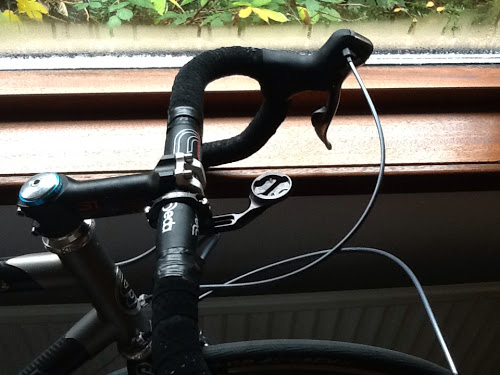
Robust construction and a smart design combine to allow for a more comfortable and ergonomic viewing line when riding your racing bike.
Two bolts secure the unit to the bars, adjacent to the stem. A single bolt clamps the adjustable head mount to the unit. All leading to a very secure and well positioned fit.

The simple, and very solid, twist-&-lock mechanism secures the Garmin 800 to the mount.
The positioning in front of the stem allows for a more accessible reading, especially when on the drops and hoods.
 Highly recommended. It’s a bit pricey but it’s the most secure mount for your not so cheap Garmin Edge so worth the investment.
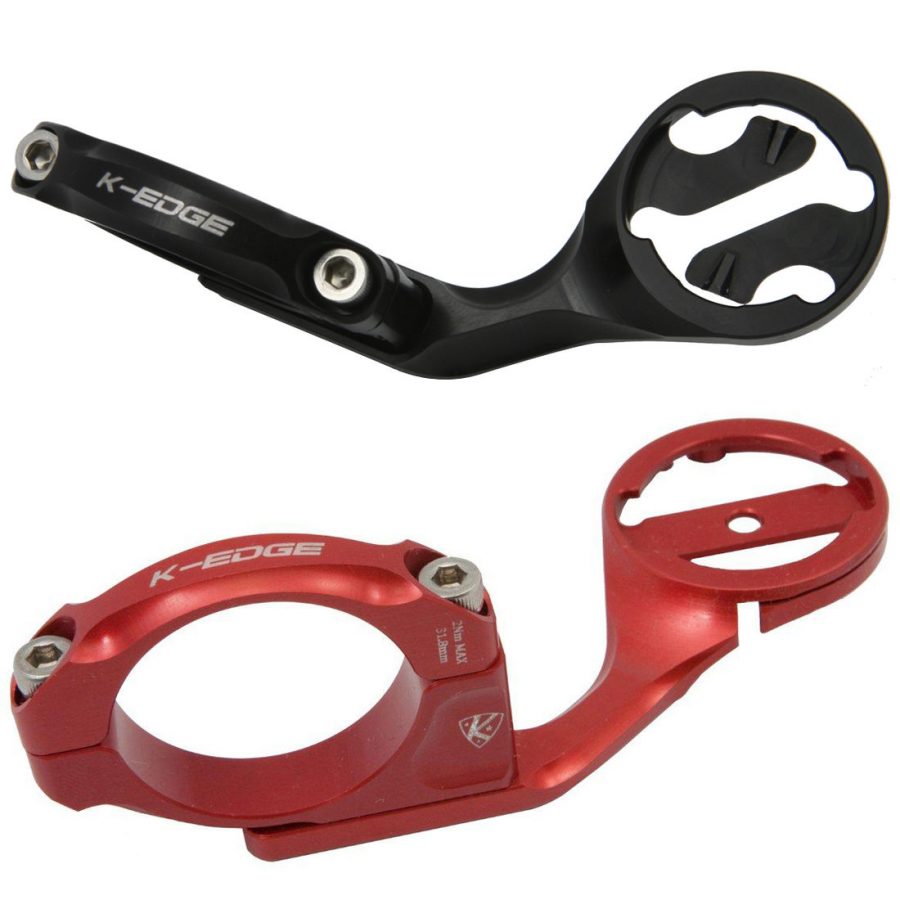
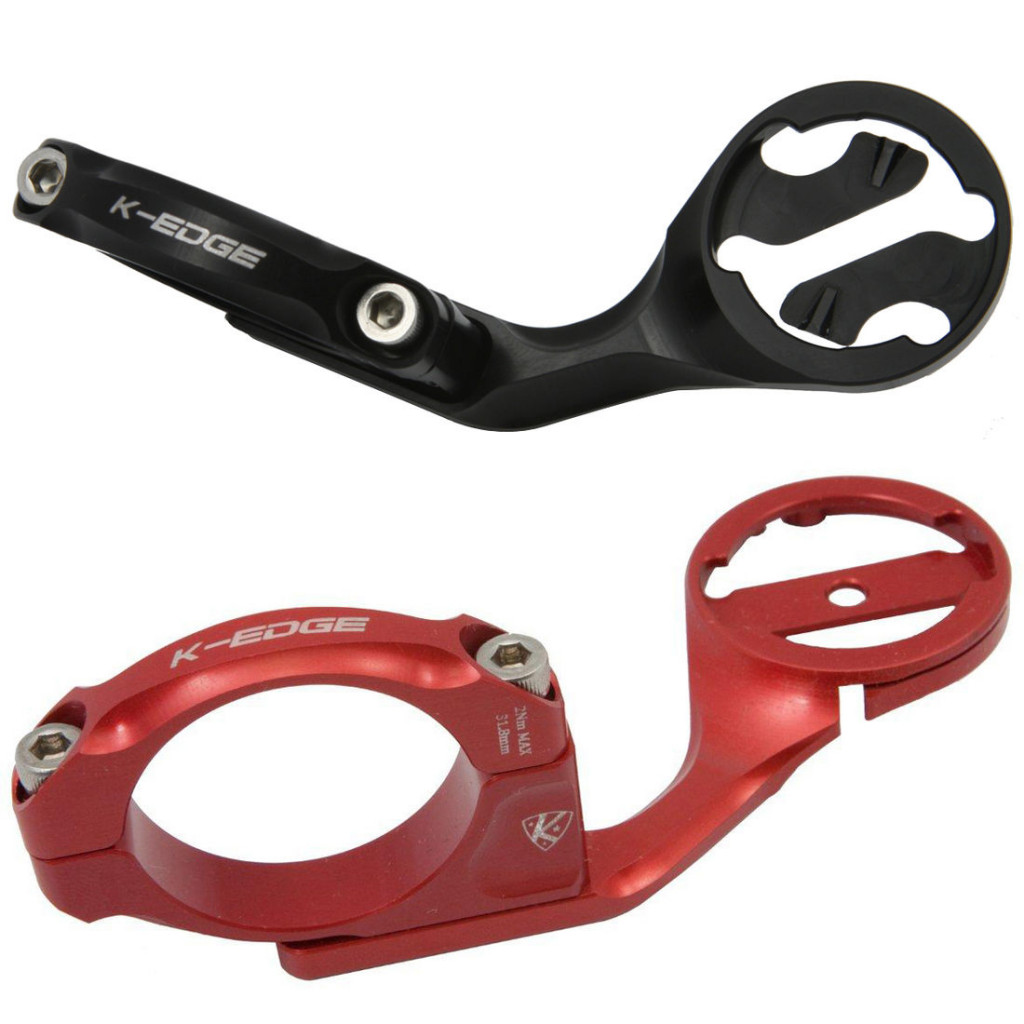
You don’t get vibration because it’s not plastic like other mounts, nor is it likely to break, it has a lifetime warranty. What’s not to like? Well some may be unhappy with the price at double the price of models like the Barfly, but I feel it’s more robust. The K-Edge model clamps rigidly around a 31.8mm diameter handlebar with two bolts (unlike other brands), and the length-adjustable arm is solid and flex free. It weighs in at 31g which is about 10g more than the plastic mounts but I feel this design is more streamlined, compact and robust than Garmin’s own mount and the BarFly.
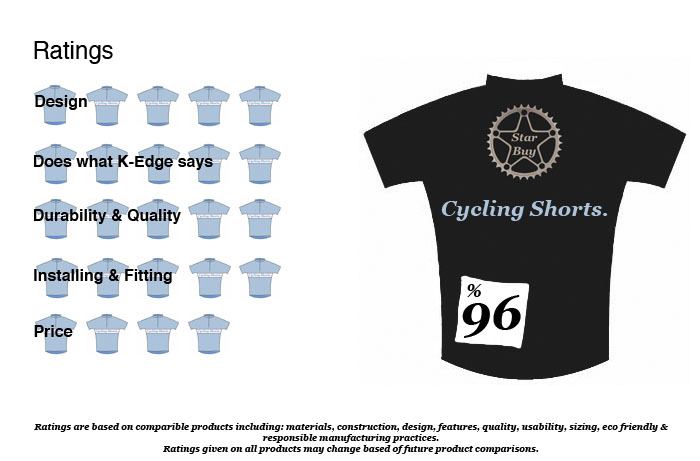
Cycling Shorts Rating: I’d give the mount 96% as its so much better than the one supplied.
Compatible With: Edge: 200, 500, 510, 800 & 810
•Fully adjustable for the different size units
•Weight: 30g
•No plastic parts
•Fits 31.8mm handlebars
•Long-lasting protective anodised two-tone fade finish
•K-Edge products are proudly CNC machined in the USA and have a lifetime warranty: you break it, K-Edge replace it!
•Ensures the security of your Garmin computer with three locking points
•For MTB & Road
•RRP £39.99 (Available from Amazon at a discount)
by Jean-Michel Lachance | Mar 12, 2013
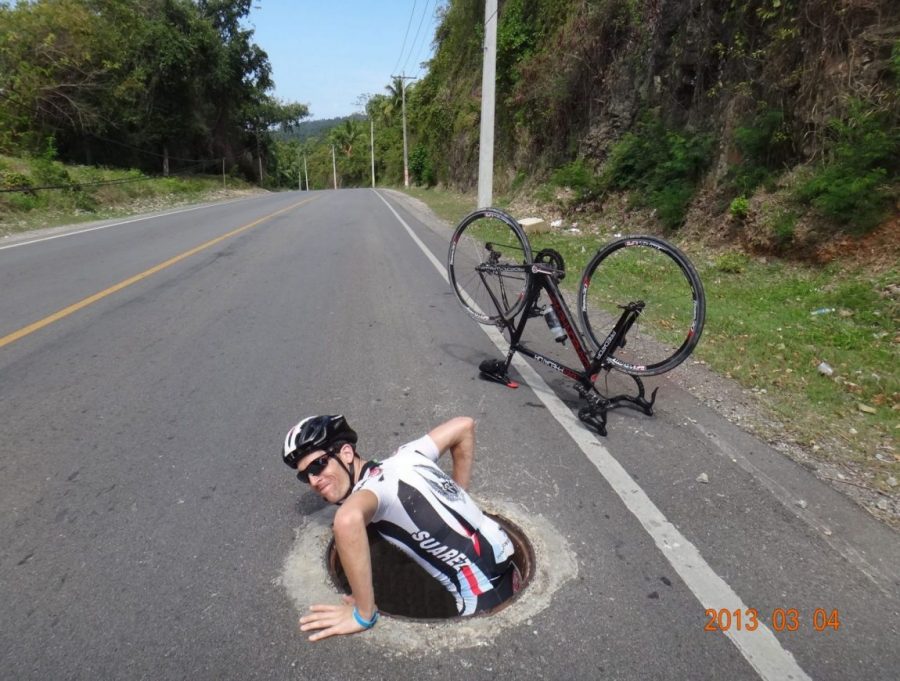
Did I find a cheaper way to Japan? ©Cory Wallace – www.fortheplanet.net
After a good 2012 season, racing mostly criterium in the USA, I dediced to make it bigger and I will continue part time with the same structure captained by Emile Abraham and another one in Japan directed by Sebastien Pilotte; Positivi Peugeot cycling team!
Après une bonne saison 2012, à courir principalement des critériums aux USA, j’ai décidé de faire les choses en grand et ainsi, je vais continuer avec la même structure dirigée par Emile Abraham; Predator Cycling en plus d’une autre au Japon dirigée par le québécois Sébastien Pilotte établi au Japon; Positivi Peugeot cycling team!
I started 2013 with the Vuelta Independencia in Dominican Republic. Its my 4th participation in the event so I knew what to expect from it.
J’ai débuté 2013 avec la Vuelta Independencia en République Dominicaine. Il s’agit de ma quatrième participation, alors je savais à quoi m’en tenir.
I prepared as best as I could on the Computrainer and doing cross country skiing workouts, but it is always hard to replicate road trainning in the winter in Quebec city!
Je me suis préparé aussi bien que je l’ai pu en m’entraînant sur Computrainer et en ski de fond, mais c’est toujours un peu difficile de répliquer l’entraînement spécifique de route en hiver au Québec!
I flew to the Dominican Republic on the 14th, so I could at least do one long road ride before the vuelta began on the 20th. Getting to Dominica was a bit of chaos as most guys on the team booked their flight with Jetblue which doesn’t accept bikes only for Dom Rep! Last minute, I had to bring 2 additional bikes with me. Adding to that, my own last minute arrangments, I did not have time to sleep and so was very tired when I finally arrived where I was greeted by Guillermo Juan of Samana Backpackers where I enjoyed the few days before the Vuelta.
J’ai volé vers Saint-Domingue le 14 février, afin de pouvoir réaliser une longue sortie sur route avec le début de la vuelta le 20. Me rendre en République fut un peu compliqué… La plupart des coureurs de l’équipe avaient réserver avec Jetblue et on apprit à la dernière minute que la compagnie n’acceptait pas les vélos à destination de République Dominicaine. J’ai donc du partir avec 2 vélos supplémentaires. Ajoutons à cela mes propres arrangements de dernière minute et je n’ai pu dormir du tout avant mon vol du matin. Je suis donc arrivé quelques peu fatigué à Samana, où j’ai été accueilli par Guillermo Juan de Samana Backpackers où j’allais passé les quelques jours d’entraînement avant la vuelta.
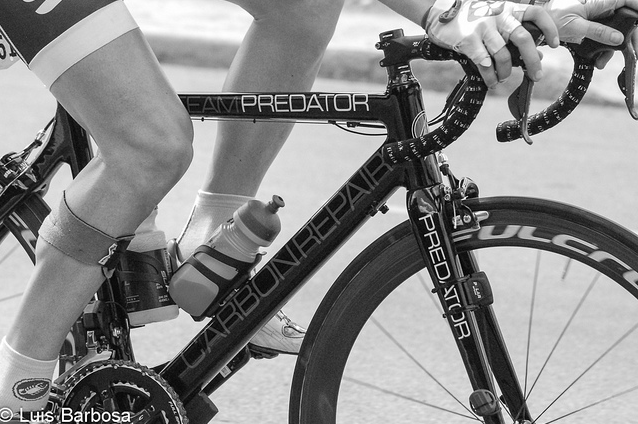
Etappa7 ©Luis Barbosa
My preparation for the Vuelta then consisted of a short 2h road ride on the 15th followed by a solid 4h30 the next day and then recovery rides up to the start of the race. I got my team predator bike the day before the race. I was amazed by it! Predator Cycling specialise in carbon repair. So, I will be racing a Kuota Kom with Di2 shifting and FSA components, a bike previously used by Hilton Clarke. Will I be as fast ? After 8 days of racing, all I can say is it’s a fantastic bike!
Ma préparation pour la vuelta a donc consisté en une petite sortie de 2h le 15 suivi d’un solide 4h30 le jour suivant et des sorties de récupérations jusqu’à ce que la vuelta commence. J’ai reçu mon vélo d’équipe le jour précédent la course. J’ai été tout à fait émerveillé. Predator Cycling se spécialise dans la réparation de vélo carbone. Je courerai donc aux USA sur l’ancien vélo d’Hilton Clarke, un Kuota Kom, réparé et remis à neuf, équipé en shimano Di2 et composantes FSA. Une vraie machine !
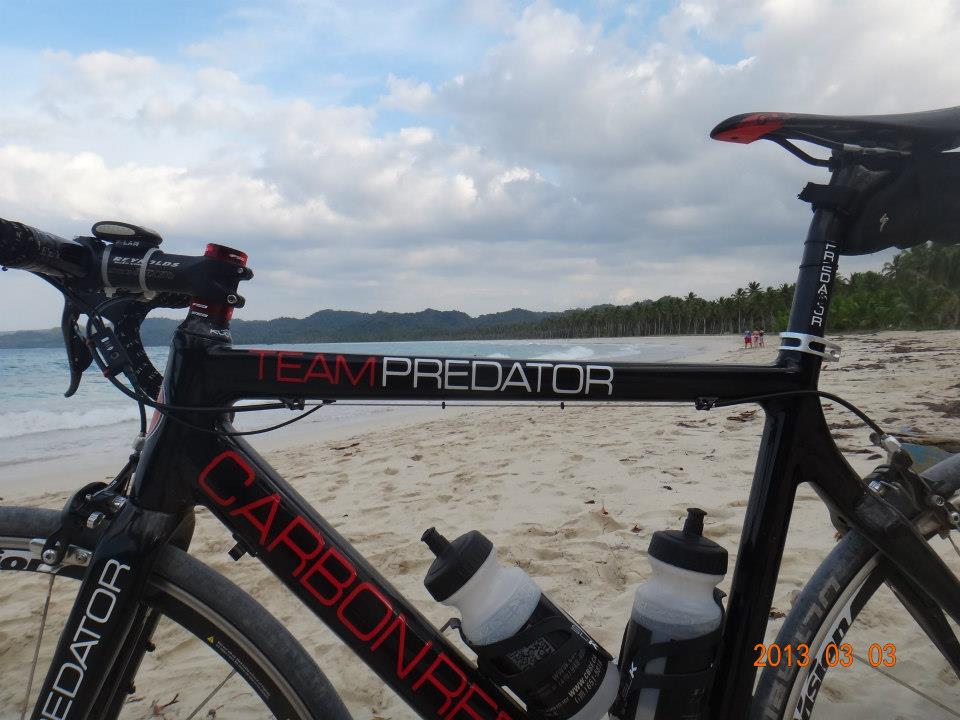
Predator Cycling Kuota ©Cory Wallace – www.fortheplanet.net
The Vuelta was a good preparation for the season. 8 days of fast racing, 1000km with flat and mountainous terrain. We raced under Ekoi.ca / 1% for the Planet colours and the team consisted of myself, Cory Wallace, Etienne Samson, Louis-Charles Lacroix, Adam Andersen and Jordan Brochu.
La Vuelta constitue la préparation idéale pour entamer la saison. 8 jour de courses rythmées, 1000km de plat et terrain montagneux. Nous avons couru sous les couleurs d’ Ekoi.ca / 1% for the Planet et l’équipe consistait de moi même, Cory Wallace, Etienne Samson, Louis-Charles Lacroix, Adam Andersen et Jordan Brochu.
We missed out on stage 1 as the main breakaway went after only 5km into the 146km race. In the end we lost 11min and all GC hopes. Anyway, the first stage was still tough for us as we tried hard to establish a counter attack to limit the time losses. As the vuelta continued, our form was also improving. On stage 5, I got myself in a breakaway before we hit the real mountains. Tough that I did not push myself very hard to follow the leaders when they passed me in fear of bonking later, but maybe I should have, as I completed the whole race alone without getting caught by a single rider.
Nous avons manqué de chance à la première étape alors que LA bonne échappée est partie après seulement 5km de course sur la première étape de 146km. Au final, je perd plus de 11min et toute chance de classement général. Quoi qu’il en soit, cette première étape aura été difficile puisque je n’ai pas ménagé mes efforts afin d’établir un groupe de contre pour limiter les écarts. Nous n’avions aucun splits de temps durant la course… Plus les étapes évoluait, plus je me sentais en jambe. Lors de l’étape 5, je me suis retrouvé dans le premier groupe au pied de l’ascension. Je n’ai pas poussé lorsque les leaders m’ont passés, par peur d’exploser plus tard, mais peut-être aurais-je du puisque j’ai par la suite complété toute l’étape solo sans me faire reprendre par un seul coureur.
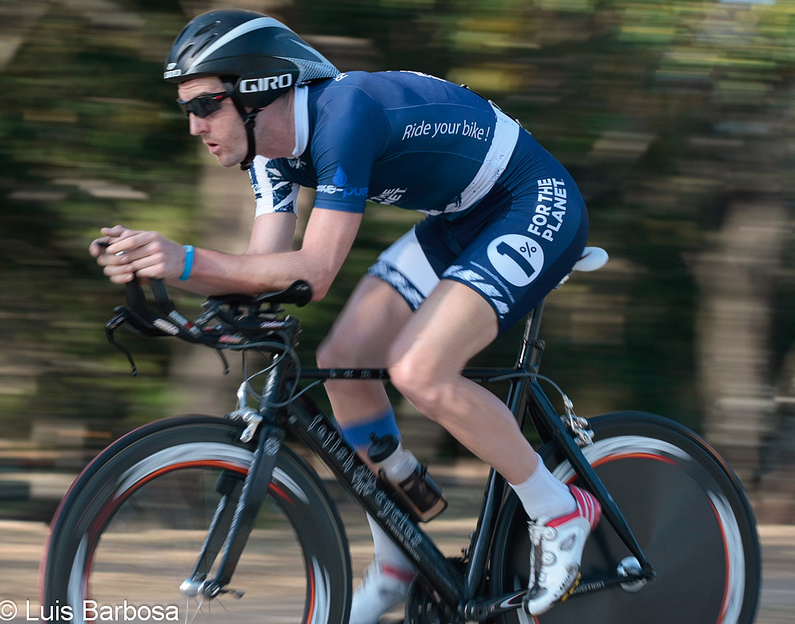
Etappa6b ©Luis Barbosa
The next day, I did a good time trial averaging 47,5km/h on my first lap and fading a little on the second lap to finish 10th, a minute and 11 sec behind the winner Bruno Langlois, not bad for someone who trained inside and skiing in Quebec.
Le lendemain, j’ai fait un bon contre-la-montre complétant le premier tour en 47,5km/h de moyenne. J’ai faiblit lors du deuxième tour pour finalement terminer à 1min11 de Bruno Langlois en 10ème position. Plutôt satisfaisant pour l’entraînement hivernal.
On stage 7, the next day, I was feeling even better and made the early breakaway of 6 after only 10km of racing. We averaged 48km/h in the first hour of racing before the peloton let us increase our gap more signigicantly. By mid race, some GC riders bridged up to us to make it a group of around 10. Meanwhile, some riders from the early break were fading off. A little while later, a crash happened in the group and we got down to 5 riders of which two were strong riders from Inteja; Diego Milan and Augusto Sanchez. In the end, I played my cards right except for the final sprint in which I led into the last corner but first to get passed by the lead out of Augusto Sanchez, to finish just outside the podium in 4th.
Lors de l’étape 7, le jour suivant, je me sentais encore mieux et j’ai décidé de joindre l’échappée du début après seulement 10km de course. Nous éti.ons 6 et le rythme était assez rapide à en témoigner la moyenne de 48km/h pour la première heure. À la mi-course, quelques coureurs nous ont rejoint alors que d’autres ont faiblit et rejoint le peloton. Quelques instants plus tard, une chute réduisit notre groupe à 5 coureurs, emportant Pablo Mudarra virtuel 2ème du général, alors que notre avance était de 3min30. En somme, j’ai bien joué mes cartes tout au long de la course, à l’exception du sprint final, lequel comportait un virage dangereux que j’ai entammé en premier pour me voir dépassé immédiatement par Augusto Sanchez qui lança le sprint pour son coéquipier Diego Milan. Je termine donc au pied du podium.
After the last race in Santo Domingo, I headed to Samana Backpackers again to rest a bit in Samana and explore some of the area. I am now heading to Tucson where I will be racing March with Team Predator before heading to Japan in early April for solid races in Asia. Funny fact, I’ve started learning Japanese with audio courses and it’s easier than I thought!
Après la course, je me suis dirigé vers Samana à nouveau pour me reposer de la course et découvrir un peu les attraits de cette région. Je me dirige maintenant pour Tucson en Arizona, où je rejoindrai mes coéquipied de Team Predator pour le Old Pueblo Grand Prix et d’autres critériums aux USA par la suite. J’irai ensuite au Japon à la fin du mois pour courrir avec Positivi Peugeot cycling team. Petite annectode, j’ai commencé les cours audio de japonais et c’est pas mal plus facile qu’on pourrait le penser!
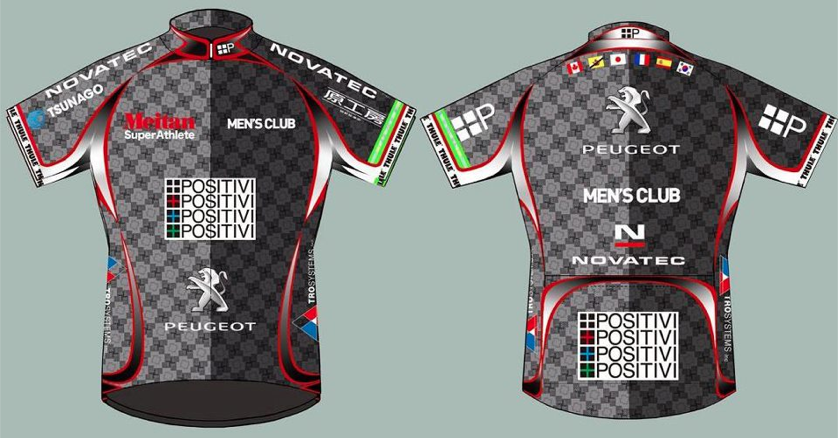
positivi
Thanks for reading ! Sayonara!
Merci de me lire ! Sayonara!
Jean-Michel
by Nancy Arreola | Feb 20, 2013
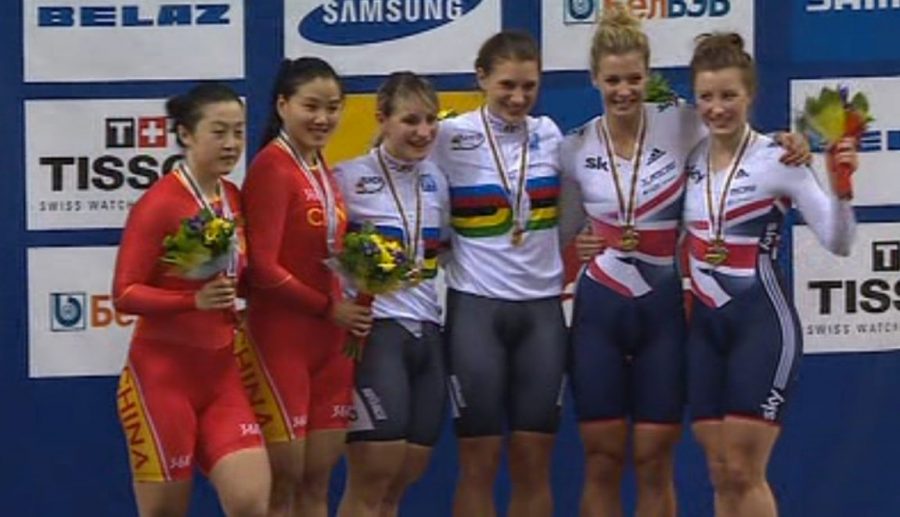
Women’s Team Sprint Podium
We woke up today in a snow covered mornin in Minsk. The trainings prior the race started early at 9am and all the Countries were here with their very best exponents.
The first session began at 1pm while Sarah Hammer qualified 1st in the IP Australia did the same in the men’s TP and we were ready for the opening ceremony and the finals to begin at 6!
The opening ceremony was beautiful they put on an amazing show that was very worth watching until the presidents of belarus and later on the UCI did a very long speach ;)
We were all exciting to see some action and see medals taken, we were so excited that we didn’t mind all the security points that make us wait for hours to get insde the velodrome. But well what can we expect from Russia?
Anyway… the first event of the evening was the women’s team sprint, the German duo of Krystina Vogel and Miriam Welte; are the Olympic Champions but this is a post Olympic year and many riders can surprise us with their form.
Germany and China qualified to fight for Gold and Great Britain against the Aussies for the bronze.
In the men’s 1km Francois Pervis (France) was the fastest followed by Simon Van Velthooven and Joachim Eillers.
The programme was followed with the Women’s Individual Pursuit Finals, Sarah Hammer won in style lapping Amy Cure who secured second while Annet Edmondson was third.
The olympic champions didn’t disappoint, The German girls won the Team Sprint, China was second while Great Britain were third with their new line up.
And then the event everyone was waiting for, the men’s Team Pursuit. This intense competition between Great Britain and Australia that everyone talks about.
But it started with the race for bronze and Denmark came out to beat Spain to take the medal.
And Australia took gold and it felt like a revenge after the Olympic Games.
This is what happened on the first day of competition but there is way more to come!!
by Lawrence Bywater | Feb 4, 2013
The 2009 Milan San-Remo. A warm sunny day awaited the 200 riders of the 100th edition of La Primavera. Amongst those on the startlist, including Andy Schleck, Bradley Wiggins and eventual winner Mark Cavendish, was the quasi Australian Heinrich Haussler. What happened in the preceding 7 hours has been retraced many times since. The coming of age of Cavendish at the tender age of 23 was obviously headline news. Haussler’s second place on the day, inches away from a first classic, rightly remained the subplot.
One day wins can define a career. Fred Guesdon is known for his triumph in Paris-Roubaix of 1997 and arguably the same fate may yet befall Johan Van Summeren who also triumphed in the hell of north in 2011. So, on the via Roma of San-Remo, in the dull sun of an April Sunday, had Heinrich Haussler’s missed the chance to define a his cycling life. Born to a German father and an Australian Mother, Haussler remained in New South Wales, Australia until 1988, when he moved to Germany to pursue a career as a pro cyclist.
His breakthrough year in the pro ranks occurred in 2005 as he won a stage of the Vuelta. Beating Pablo Lastras and Linus Gerdemann and others from a small breakaway on a rolling stage 19 he showed tactical nouse by allowing Martin Elmiger to lead him out to catch Juan Manual Fuentes just before the line. The following years, 2006, 2007 and 2008 remained barren years with sparks of success such as top ten’s at the Tour and Gent Wevelgem.
Yet it was 2009 when the stars aligned for Haussler as he didn’t finish outside the top 10 in all stages of the Tour of Qatar and won two stages of the Tour of the Algarve in the early season. Stages at Paris Nice and the Tour de France followed, yet it was in the Spring Classics that he really hit a purple patch. 4th at Dwars Door Vlaanderen, 2nd at Flanders and 7th at Paris Roubaix and at Milan San Remo, Haussler caught Cavendish by surprise, sprinting from over 500 metres to go, coming within a whisper of the greatest win of his career.
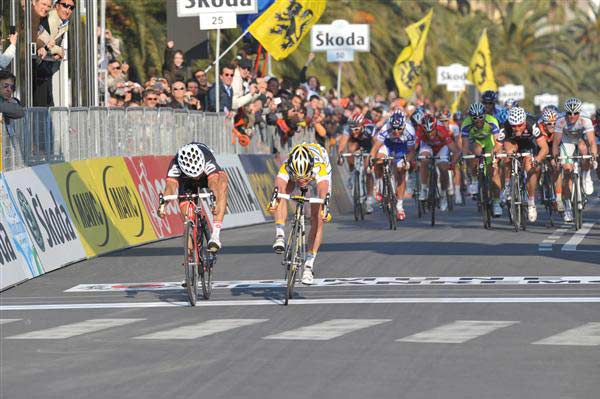
Mark Cavendish pips Heinrich Haussler by a bike throw at the 2009 Milan San-Remo
The jubilant Cavendish hugging Erik Zabel whilst the Australian collapsed to the ground, meters after the finish line could not have been more of a juxtaposition. So what made the difference that year? His growing experience as a fifth year pro, the switch in outfits from Gerolsteiner to Cervelo and an experienced team behind him or a winter of perfect preparation. Whatever the reason, it was clear that Haussler was making a jump to the upper echelons of the sport.
Yet a number of factors kept and continue to keep Haussler at bay. The difficult marriage of Cervelo and Garmin after the former removed their sponsorship at the end of 2010 meant he was now competing for leadership with Thor Hushovd amongst others. This combined with a series of illnesses and injury saw his season peter out after a successful early romp at the Tour of Qatar and Paris Nice. It seemed that he had perhaps transformed from a classics contender to a second string sprinter as the majority of results in the next two years came in stage races and not one day classics. Whilst an astonishing four second places in a row in the Tour of California of 2012 all behind Peter Sagan, can hardly be considered a poor result, his failure to get his arms in the air must have be discouraging.
This brings us to the creation of IAM cycling and Haussler’s switch from Garmin at the end of 2012. The team’s roster built through that year, whilst centred around major Swiss talent, contains a number of journeymen like Thomas Lofkvist, Johann Tschopp, Sebastian Hinault and Haussler’s breakaway companion from that Vuelta stage in 2005, Martin Elimiger. As Haussler himself acknowledges he looks back on his time with Cervelo with rose tinted glasses and he draws some similarities with his new employers. The roster is similar in the sense that the majority of riders are up and coming (like Kristof Goddaert and Matthias Brandle) or have had a barren few years like Lofkvist or himself. In his position as one of the more senior riders he will undoubtedly receive the support of others during the season.
Coming full circle to the 2013 Milan San Remo and IAM’s successful application to La Primavera, could Haussler be in the frame again? As he enters the Tour of Qatar off the back of what he has identified as his best series of winter training in a number of years you certainly wouldn’t bet against him. At 28 years old he may even be entering the prime years of his career and perhaps in the near future he will have that chance to rewrite his script that was so cruelly altered by a barrelling Manx Missile on the 29th of March 2009