by Paul Harris | Nov 21, 2012
Bristol Oktoberfest – Better than Munich…
Aaa, summer. How beautiful while it fleetingly lasts, and how sad to see it go. Still, if there’s one thing to look forward to when the nights grow shorter and the ambient temperature drops, it’s the approach of October, because when the tenth month starts, that means Oktoberfest is not far away.
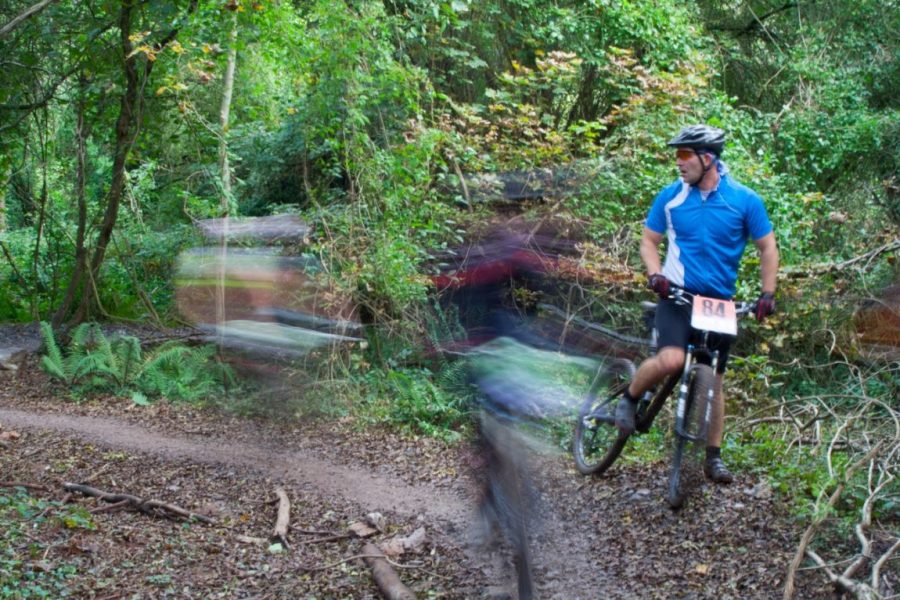
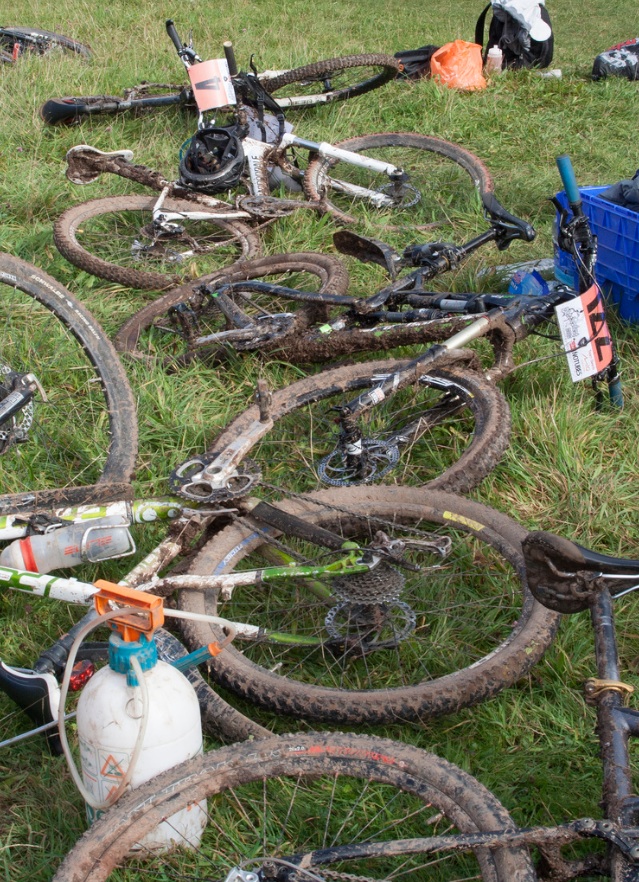
The Bristol Oktoberfest is the second of two classic annual events held at Ashton Court, a stone’s throw from the mouth of the Severn – an eight hour mountain bike endurance race, there are categories for teams of four, pairs, or (for the truly masochistic) solo entries in male, female and mixed forms, with further subdivisions for single speeds and old git racers. As such, it attracts a wide variety of abilities, including the returning Team NTG MTB, back to have a second crack at the excellent single track on offer after our great (if tough!) endurance debut at June’s Bike Fest.
Instead of putting ourselves through the grinding pre-race endurance test of camping, we set some early-morning alarms and charged down the M5 first thing. An early start, to be fair, but given the fairly grim weather in the build up, it was the better choice – on arrival we were greeted by a cheerful Oktoberfest-hat-type-wearing-type who guided us to park on the access road as the camping field was having some hydration issues. Team captain Jonno stepped up to the batter’s plate first of all, taking his place for the Le Mans style running start amongst the hundreds of other riders – I held his Stanton as the galloping hordes charged back up the hill, with more than a few entrants somehow accidently arriving a little late and giving themselves somewhat less of a distance to run. Strange how that happens.
As nine o’clock passed us by, the race started and a great torrent of riders came sprinting past me, a train that ran for maybe ten minutes before the last stragglers pottered by. Jon got a solid midpack start and battled his way through the traffic to complete lap one in under 43 minutes, a lap quicker than some teams who ended up 20 places or more above us – Steve went after El Capitan and logged an even quicker lap, with Luke putting a great performance in position three and me pottering nervously about on the peripheries as the anchor number four. By the time Luke handed over the team scrunchy, I’d been watching bike racing for almost ninety minutes and was tortured by a mixture of performance anxiety and a sense of gagging to get involved. No matter – time to suck it up and get stuck in.
Job number one was to charge through the rock garden, and I wasn’t in there many seconds before a most welcome experience occurred – I caught someone up. This was a bit of a new one for me, as I spent most of Bike Fest getting out of people’s way, and the rock garden’s not an easy place to pass. Consequentially, as traffic backed up behind the pair of us, I felt the onset of a needless touch of pressure and ran ride on a slick section, out of everyone’s way. Cursing under my breath, I joined the back of the snake as we pedalled out of the woods and into the field that loops up to where the finish line was or Bike Fest – and I overtook a couple more riders. Me! Overtaking people! It was just great.
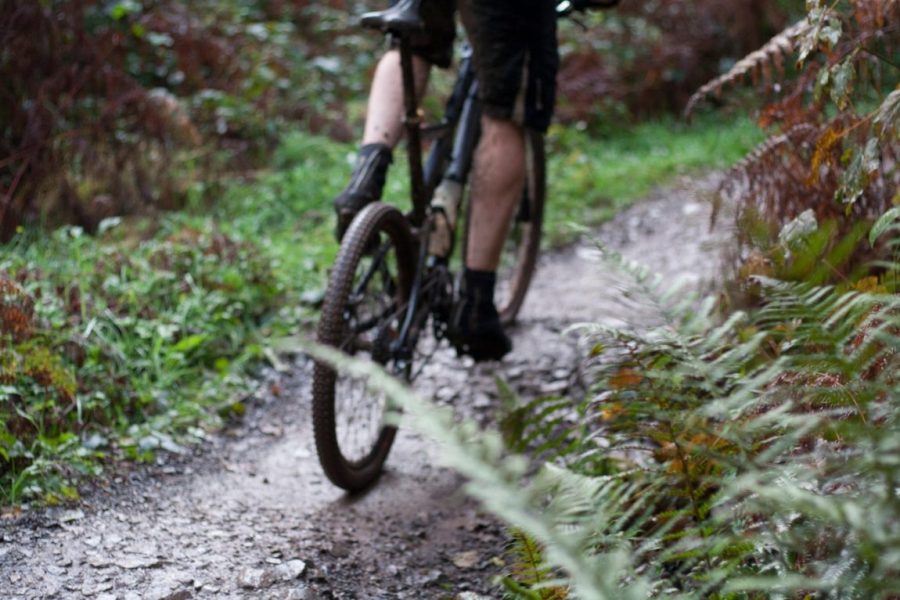
Ashton Court was every bit as wonderful as it had been earlier in the year, the flowing single track largely impervious to the wet weather – the sole concession to the elements was the rather impressive construction of a wooden bridge over a particularly marshy section of trail, but the track rode really well and was little the worse at the end of eight hours of racing. Team NTG MTB’s one lap stint policy worked well once more, the 5.7 miles round the course plenty for the likes of our legs (although again, there were lunatics doing the whole thing on their own – madness, I tell thee) and working out so that we each had three laps, but by the time I rolled into the transition area for the final lap, we were up against it. In a desperation move, I left the saddle bag, Camelbak and pump at the van to save weight and took off needing to lap about five minutes quicker than I had done all day. I gave it everything, I swear, I left it all out on the track – by the time I
started the last climb, I was done for. Then some clown , with a dazzling sense of humour, shouted out that there were ten seconds left – gritting my teeth, I turned myself inside out over the last 200 metre climb, came close to stacking in front of the crowd on the finish line jump, then had to invest five minutes or so in serious hyperventational recovery mode. I’d missed the cut by, oooo, five minutes or so which made the last minute or so of torture entirely unnecessary. Thanks, Mr Clown Man.
Final climb idiocy aside, Oktoberfest was every bit as much fun as the Bike Fest earlier in the year, with an easygoing atmosphere and plenty of riding on a wonderful course. I said it after Bike Fest and I’ll say it again here – if you’ve never done an event like this, don’t be intimidated, your fellow competitors are all lovely people (even if some of them are much, much quicker ), the track is superb, and you will have a brilliant time. Can I add a proviso? I was a bit fitter for the second race, and it definitely made it more fun, but you absolutely do not have to be Thomas Frischknecht to enjoy it. I was more like Thomas the Tank Engine, and I still survived….
by Anna Magrath | Nov 18, 2012
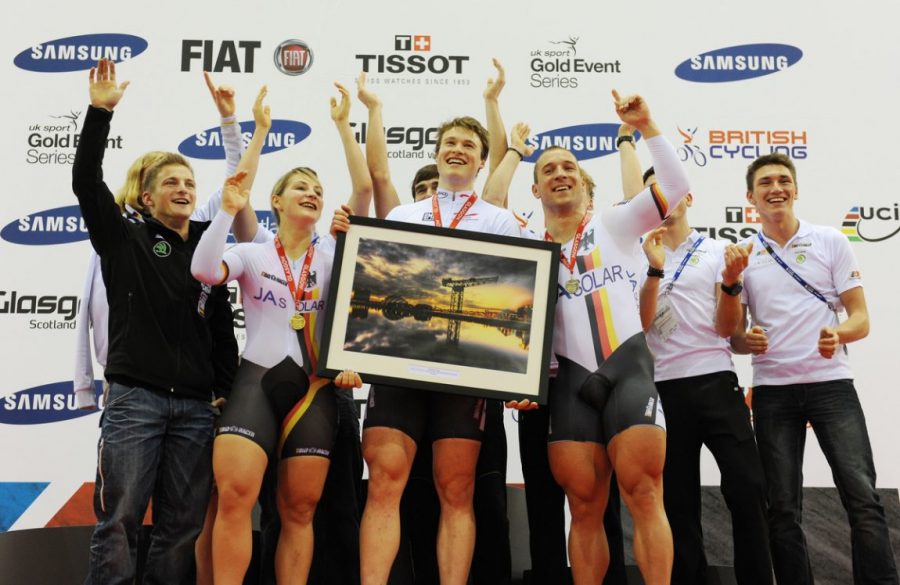
Men’s Sprint
GOLD – Germany (BOETTICHER)
SILVER – Germany (FOERSTEMANN)
BRONZE – Rusvelo (DMITRIEV)
An all-Germany final saw Friday night’s Team Sprint gold medallists Robert Foerstemann and Stefan Boetticher go head to head for gold in the Men’s Sprint final. It was Boetticher who got the better of his countryman, winning the first match and taking the second with a stunning sprint in the final 200m that saw him take gold in emphatic style and bring the UCI Track Cycling World Cup to a fitting end.
The bronze medal match was contested by Spain’s Juan Gascon Peralta and Denis Dmitriev of the Rusvelo team who needed only two matches to beat his rival and claim the bronze.
Great Britain’s representation came in the form of Olympic Team Sprint gold medallist Philip Hindes who finished 12th in the competition overall.
Olympic champion Jason Kenny did not feature in the Sprint event after a heavy fall in the Keirin final on Saturday night where his World Cup was cut short with a broken collarbone.
===
Women’s Keirin
GOLD – Germany (VOGEL)
SILVER – Petroholding Leningrad (GNIDENKO)
BRONZE – Hong Kong (LEE)
Germany’s in form Kristina Vogel picked up her second gold medal of the week, adding Keirin gold to the Sprint she won on Saturday night. Silver went to Ekaterina Gnidenko, racing for the Petroholding Leningrad team, and bronze went to Hong Kong’s Wai Sze Lee.
Great Britain’s Becky James qualified for the final and was unlucky not to finish on the podium after leading out after the exit of the derny.
Great Britain’s Jess Varnish missed out on the final after finishing 6th in her second round heat. After racing in the Team Sprint, Sprint and 500m TT fatigue was evident in Varnish and she finished 9th overall.
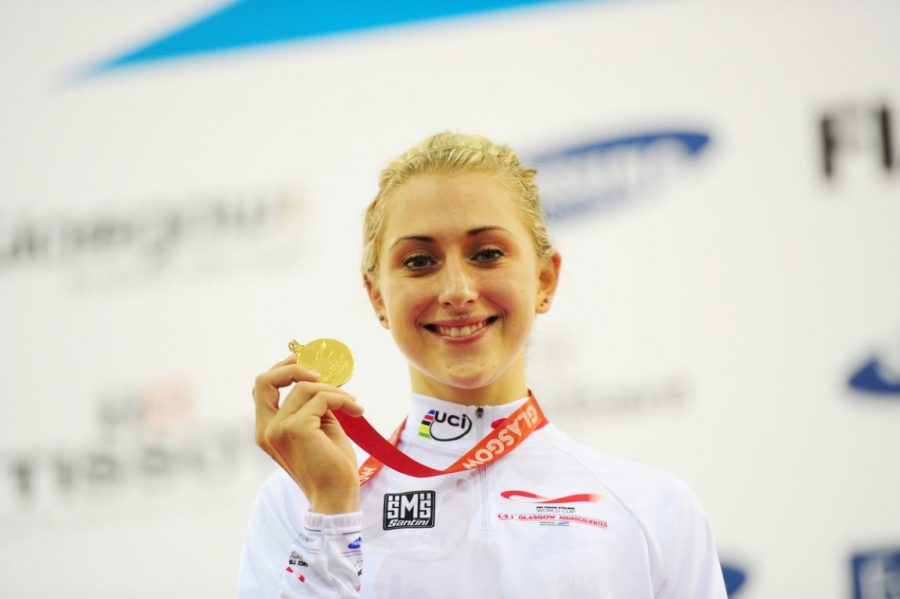
Women’s Omnium
GOLD – Great Britain (TROTT)
SILVER – Australia (ANKUDINOFF)
BRONZE – Russia (BALABOLINA)
Olympic and World Omnium champion Laura Trott won the Women’s Omnium title in dramatic style, beating rival Ashlee Ankudinoff from Australia into silver in the final heat of the sixth event, the 500m Time Trial. Going into the final event Ankudinoff was two points ahead of Trott with Trott needing to beat her rival by two places to secure gold. An aggressive ride in which Trott gave everything she had saw her deliver once again, finishing with the second fastest time behind Russian Tamara Balabolina which was enough to secure gold and bring the Sir Chris Hoy Velodrome crowd to their feet. Victory in the 500m Time Trial meant Balabolina did enough to take home bronze for Russia.
===
Women’s Omnium
Omnium I – Flying Lap
Rank 1 Australian (ANKUDINOFF) – 14.340
Rank 2 Fullgass.org (OLABERRIA DORRONSORO) – 14.364
Rank 3 Poland (PAWLOWSKA) – 14.524
Omnium II – Points Race 20km
Rank 1 Bulguria (SHARAKOVA)
Rank 2 Lithuania (TREBAITE)
Rank 3 Mexico (ARREOLA NAVARRO)
Omnium III – Elimination Race
Rank 1 Great Britain (TROTT)
Rank 2 Poland (PAWLOWSKA)
Rank 3 Russia (BALABOLINA)
Omnium IV – Individual Pursuit 3Km
Rank 1 Great Britain (TROTT)
Rank 2 Australia (ANKUDINOFF)
Rank 3 Poland (PAWLOWSKA)
Omnium V – Scratch Race 10Km
Rank 1 Russia (BALABOLINA)
Rank 2 Lithuania (TREBAITE)
Rank 3 Mexico (ARREOLA NAVARRO)
Omnium VI – 500m Time Trial
Rank 1 Russia (BALABOLINA)
Rank 2 Great Britain (TROTT)
Rank 3 Poland (PAWLOWSKA)
by Nick Dey | Nov 18, 2012
Bicycling Science, 3rd Edition
Everything you wanted to know about the bicycle but were too afraid to ask
 David Gordon Wilson is British born Professor of Mechanical Engineering Emeritus at the Massachusetts Institute of Technology. He is the co-author of the first two editions of Bicycling Science and was the editor of the journal Human Power from 1994 to 2002.
This book covers the history of human powered vehicles and, as the title suggests, focuses firmly on the bicycle. It is a text in three parts: I Human Power, II Some Bicycle Physics and III Human-Powered vehicles and machines. Each of which can read independently of the others.
The third edition’s (2004) first section, I, ‘Human Power’ opens with a very informative and myth-dispelling addition to the growing canon covering the history of the bicycle. It is a short but authoritative supplement with diagrams and photographs smartly selected and well positioned to support the text. Rather refreshingly all claims, throughout the book, are fully referenced to allow the reader to delve deeper should they so wish along with a recommended reading suggestion here and there (is that a ‘get a life, Dey’ I hear from my ever loving partner!) For the more evangelical bicycle advocate there is a brief but telling list of ‘new’ technologies born from bicycle design, engineering and use; leading the way is the mass production and use of ball bearings with the oft-neglected good-roads movement also getting a mention – topical as the latter is today. Chapter one also covers, in sufficient detail for all but the expert, Human Power Generation. This encapsulates bicycle focused physiology (how energy gets to the muscles of a rider), biomechanics (how the muscle produce power at the pedals) and should, the author states, ‘allow the reader to feel qualified to absorb the main conclusions of the research papers in this area.’ It is essentially a well written literature review and I for one felt a little daunted at times but quickly discovered my research reading skills were revving back up to speed. The counter-intuitive description of ‘the timing and direction of foot force, choice of crank length, the effect of saddle height and gear ratio, and where to stand up or ‘bounce’ the upper body’ are all treated in depth and supported by evidence based research, with the tradition of the philosophical ever present. For the more competitive cyclist there is a very useful treatment covering the measurements of human power output, how to describe pedalling performance quantitatively and a very useful presentation into critical power using power-duration curves along with detailed pedal-force data and graphs. Non-round chainwheels also receive useful coverage, another highly topical debate in the age of Wiggo. There is a closing piece on the thermal effects of cycling. Again one only needs to observe the top riders and teams to see this science trickling in and, not before time, replacing much erroneous traditional methods. The conclusion to the chapter reads like a British Cycling ‘marginal gains’ to do list and the eight pages of academic references tell you all you need to know about the diligence of the author.
Section II ‘Some Bicycling Physics’ is the where I began my reading. For want of getting carried away, as I often do when physics takes centre stage, I shall be brief. Building on the power-duration data from the previous chapter the author presents a quantitative treatment of cycling specific physics. Anyone with an interest in physics, a little patience and, most usefully, a head full of positive secondary school memories, will be amply rewarded for their efforts. The main protagonists are all covered namely propulsive force, air resistance and rolling resistance. The author then takes it a step further; what happens when bumps are encountered – of vital interest to the classics riders out there. The concept of vibration frequencies is simply presented and should allow the reader to filter the engineering and physics from the marketing hype the next time a high-end bike is purchased. A lot of paper is devoted to the relationship between power and speed and this alone makes this book a must-read for anyone venturing into the world of the power meter. Bicycle aerodynamics is covered with the usual simple physics formula, text, graphs and some very eye-catching photographs to emphasise the points and aid the understanding of the concepts – all the while retaining a strong link to the context of the bicycle. Rolling resistance, with a focus on wheels tires and bearings ramps up the physics a wee bit but is well worth devoting time to, especially if, like me, you are considering taking the hand-built wheel route. A brief but detailed design, engineering and physics of braking, in differing weather conditions, brings to a close this very informative and rewarding chapter.
The final section, III, Human-Powered Vehicles and Machines, is where the author diverges from the bicycle as we know it. It is the authors stated aim to ‘… expand your experience, and perhaps to make you want to use, or even to design and make, some interesting human-powered vehicles other than bicycles.’ In it he takes a more utilitarian approach and differentiates between the developed and developing world, all the while suggesting that the more bicycling the better; ‘… Even in large countries, like the United States, over half the daily “person-trips” by automobile are of under 8 km (5 miles), a distance most people can easily cover on a bicycle in most weather conditions.’ This chapter contains varied examples of human-powered tools and of record breaking and other interesting vehicles – other than the standard bicycle. It concludes with a thought-provoking piece on Human-Powered Vehicles in the Future; one for all you light weight junkies, aero wheel obsessives and mono-blade maniacs. The piece on the hydraulic disc brake, coming as does so soon after a brief summary of governing body regulations and incentives, is somewhat prescient. The question hangs in the air, what drives the industry; science and performance or marketing? If it is indeed the latter then we are living in a dark age of delusion.
Overview, from the back cover
The bicycle is almost unique among human-powered machines in that it uses human muscles in a near-optimum way. This new edition of the bible of bicycle builders and bicyclists provides just about everything you could want to know about the history of bicycles, how human beings propel them, what makes them go faster, and what keeps them from going even faster. The scientific and engineering information is of interest not only to designers and builders of bicycles and other human-powered vehicles but also to competitive cyclists, bicycle commuters, and recreational cyclists.
The third edition begins with a brief history of bicycles and bicycling that demolishes many widespread myths. This edition includes information on recent experiments and achievements in human-powered transportation, including the “ultimate human- powered vehicle,” in which a supine rider in a streamlined enclosure steers by looking at a television screen connected to a small camera in the nose, reaching speeds of around 80 miles per hour. It contains completely new chapters on aerodynamics, unusual human-powered machines for use on land and in water and air, human physiology, and the future of bicycling. This edition also provides updated information on rolling drag, transmission of power from rider to wheels, braking, heat management, steering and stability, power and speed, and materials. It contains many new illustrations.
Title:
Bicycling Science – Everything you wanted to know about the bicycle but were too afraid to ask
Author:
David Gordon Wilson
Published by:
MIT Press; 3rd Revised edition edition
Available in Paperback
Price:
RRP £19.95 (Paperback)
by Anna Magrath | Nov 18, 2012
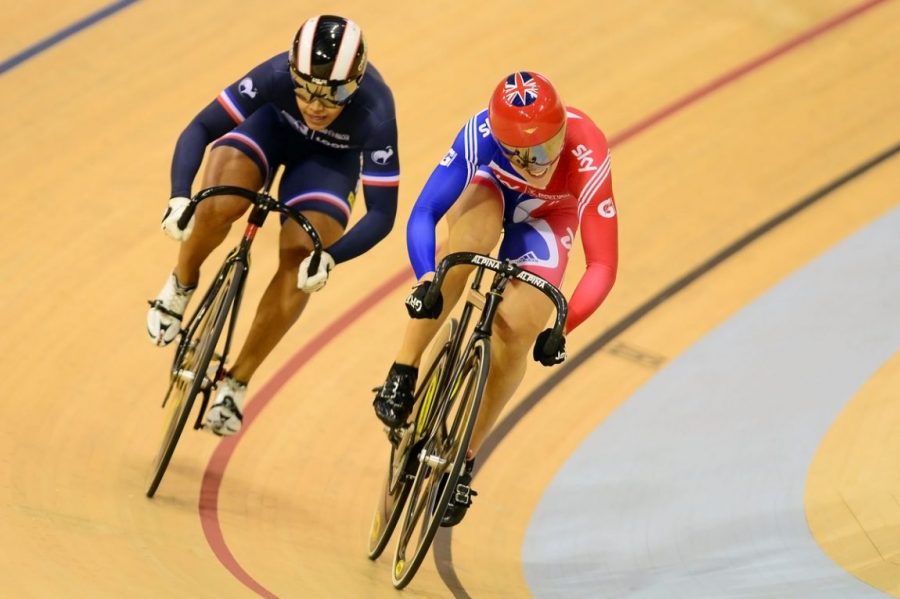
Jessica Varnish of Great Britain leads Olivia Montauban of France in the Women’s Sprint 1/8 Finals. – ©Alex Broadway/SWPIX.COM
Men’s Keirin
GOLD – Germany (BOETTICHER)
SILVER – Team Jayco-AIS (LEWIS)
BRONZE – Japan (SAKAMOTO)
When the gold medal race eventually got underway – after a false start by Japan’s rider Takashi Sakamoto, a faulty gun and a few issues with the derny – it was Australia’s Peter Lewis at the front and Kenny trailing in third. Once the derny left the track it was Kenny and German rider Stefan Boetticher who went head-to-head on the final lap. However, there was a dramatic twist as Kenny turned into Boetticher and crashed out taking France’s rider Quentin Lafargue with him. In the end Boetticher held his nerve and took the gold.
Earlier on there was more bad luck for British riders as Welshman Lewis Oliva crashed with Australia’s Andrew Taylor in the second round.
World Cup standings after 2 round:
- BOETTICHER (12 points)
- PUERTA (12 points)
- LAFARGUE (12 points)
===
Women’s Sprint
GOLD – Germany (VOGEL)
SILVER – Great Britain (VARNISH)
BRONZE – Great Britain (JAMES)
The semi-final saw last night’s Team Sprint gold medallist Great Britain teammates Rebecca James and Jessica Varnish go head-to-head to earn a place in the gold medal race. After the first two legs of the semi-final the riders it was 1-1, with it all coming down to the decider. In a strong display by Varnish, she earned her place in the gold medal race.
Vogel took the shine out of Varnish in the opening race of the gold medal Women’s Sprint final with a solid performance. The second race followed the same vein as Varnish attempted to go out early with the sprint only for Vogel to come back and take the win and secure gold.
James took the first of three races with a solid performance but Lee came back in the second to force a deciding duel.
World Cup standings after 2 round:
- LEE (19 points)
- VARNISH (18 points)
- JAMES (18 points)
===
Men’s Individual Pursuit
GOLD – Denmark (HANSEN) – 4:20.875
SILVER – Ireland (IRVINE) – 4:22.745
BRONZE – Spain (MUNTANER JUANEDA) – 4:28.429
Martyn Irvine and Lasse Norman Hansen went head-to-head for the gold. Hansen made the better start and grew a good lead by the first time check. The gap was not clawed back and the Dane took the win with ease – adding another gold medal to the Team Pursuit medal he achieved yesterday.
The bronze medal race started with Spanish rider David Muntaner Juaneda taking an early advantage and building a 2 second lead at the midway point. The gap was too much for the New Zealand rider Dylan Kennett to pull back and Muntaner Juaneda took the bronze.
World Cup standings after 2 round:
- HANSEN (12 points)
- IRVINE (10 points)
- MUNTANER JUANEDA (8 points)
===
Men’s Omnium
GOLD – Germany (LISS)
SILVER – Australia (O’SHEA)
BRONZE – Spain (ELORRIAGA ZUBIAUR)
Omnium IV – 4km Individual Pursuit
Rank 1 Great Britain (DIBBEN) – 4:26.982
Rank 2 Belgium (DE KETELE) – 4:28.908
Rank 3 Australia (O’SHEA) – 4:29.699
Omnium V – Scratch Race 15km
Rank 1 Denmark (KRIGBAUM)
Rank 2 Kazakstan (LYALKO)
Rank 3 Japan (HASHIMOTO)
Omnium VI – 1km Time Trail
Rank 1 Germany (LISS) – 1:02.768
Rank 2 Australia (O’SHEA) – 1:03.475
Rank 3 Great Britain (DIBBEN) – 1:03.955
Great Britain’s Jonathan Dibben came out on top in the individual pursuit, placing him in sixth in the overall Omnium standings. The race saw Belgium’s Kenny De Ketele and Australia’s Glenn O’Shea finish second and third respectively.
The scratch race started with the home crowd hoping for a win by fancied Jonathan Dibben. He faced stiff competition in world champion Australia rider Glenn O’Shea who was involved in a number of break-away groups in the early stages. In the end it was Mathias Wichmann Krigbaum, Alexey Lyalko and Eiya Hashimoto who succeeded in lapping the main group and went on to claim the top 3 positions.
Heading into the last event of the Omnium, the table was tight at the top with only 2 points separating the top three. Dibben put in a solid time and ended up third behind rank 1 Lucas Liss and rank 2 O’Shea.
After some fantastic racing over the six events, Germany’s Lucas Liss was too strong for the competition, taking the gold medal with Australia’s World Champion O’Shea taking silver and Spain’s Unai Elorriaga Zubiaur with the last place on the podium in bronze.
World Cup standings after 2 round:
- LISS (12 points)
- SIMION (12 points)
- O’SHEA (10 points)
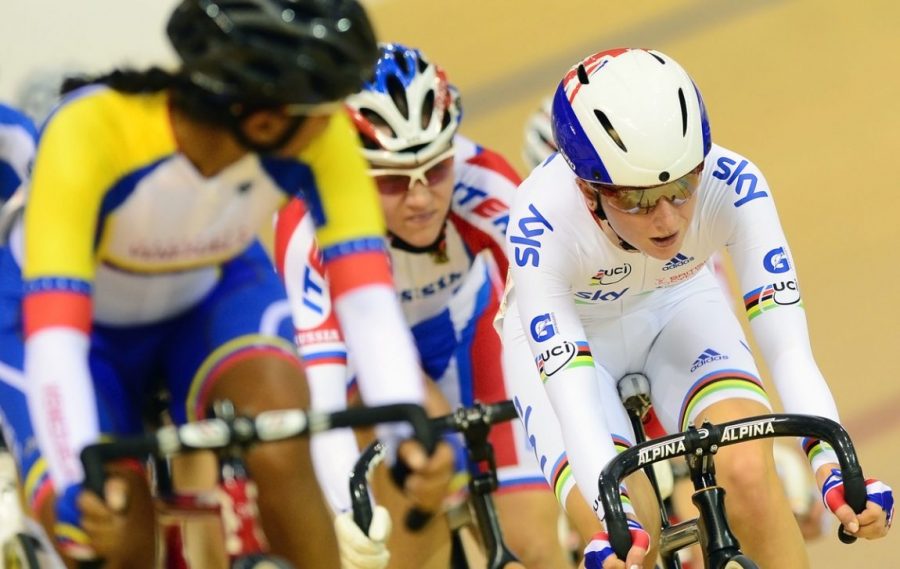
Laura Trott of Great Britain competes in the Women’s Omnium Points Race 20Km – ©Alex Broadway/SWPIX.COM
Women’s Omnium
Omnium I – Flying Lap
Rank 1 Australian (ANKUDINOFF) – 14.340
Rank 2 Fullgass.org (OLABERRIA DORRONSORO) – 14.364
Rank 3 Poland (PAWLOWSKA) – 14.524
Omnium II – Points Race 20km
Rank 1 Bulguria (SHARAKOVA)
Rank 2 Lithuania (TREBAITE)
Rank 3 Mexico (ARREOLA NAVARRO)
Omnium III – Elimination Race
Rank 1 Great Britain (TROTT)
Rank 2 Poland (PAWLOWSKA)
Rank 3 Russia (BALABOLINA)
In the first of the women’s Omnium Flying Lap the current world champion came an unexpected fourth with the Australian, Ashlee Ankudinoff, taking the win with a solid performance.
Trott entered the Points Race as World and Olympic champion but faced tough competition from a strong field. In the end a couple 20 point lapping from the likes of Tatsiana Sharakova and Ausrine Trebaite were too much for Trott and she finished ninth.
The elimination race saw a rider go down hard and have to be taken off on a stretcher. After the restart Trott rode a great race with an enthralling sprint over the last lap to take the win.
The Omnium is set up well for the next stages tomorrow.
===
UK BBC Broadcast Times
by Heather Bamforth | Nov 17, 2012
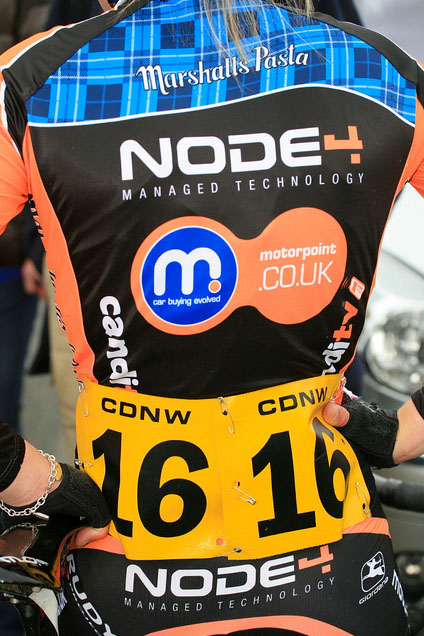
So, with the number of Premier Calendar races at just 6 events in 2013, you would think that road racing has hit an all-time low. I am glad to say that in the North West we are actually working hard to show that is not the case, and I am pleased to be involved with the inaugural Cycling Development North West Women’s Road Race League next season. It is not unique in that it is the first women’s road race league to exist, not at all, but it is unique in that it gives women in the lower categories an opportunity to race at a competitive level over a reasonable distance.
“How is that different?” I hear you cry. Well, for a start, due to the various costs of organising a road race, and the relatively small numbers of women riders that compete, most road races are open to all categories of women, from Elite to fourth, and many are over a distance in excess of 50 miles. The remaining races that women can compete in are usually circuit races which can last anything from twenty minutes up to an hour, covering a distance of say approximately 20 miles. So, if you’re a fourth or third category rider looking to make a move into road racing for the first time, you could be totally unprepared for what is waiting for you when you get on the line at the road race.
Yes, there is a big difference between finishing a circuit race over 15 to 20 miles and being able to be competitive in a race over more than 50 miles when you’re not used to it. Unfortunately, some women have to travel hundreds of miles to get a ride in a road race, only to get shelled out of the back on the first lap because it is totally different racing on the open road than it is riding around a closed circuit. Worse still are the crashes that can occur because some riders can lose concentration because they are not used to riding in a bunch/riding over such a long distance (compared to your 40 minute circuit race), tiredness and fatigue sets in and you either get shouted at for nearly knocking somebody off or you just get really disheartened because you aren’t as good as you expected to be and you think, “why do I bother?” All the fun is taken out of the race and you forget why you are there in the first place.
The CDNW Women’s Road Race League is only open to second, third and fourth category riders, with the longest race being over 65km (40 miles). The courses being used are not hilly or too technical however they are well-suited for practising your race technique, and are races that will provide the stepping stone up to the longer road races, including the National Series Road Races. There are two main reasons for these races – they assist younger (Junior) riders who are making the move from Youth “A” circuit races on to the road for their first season as a Junior, and they are also to assist women who are new to the sport of competitive cycling (as opposed to sportives, etc).
Unfortunately, women’s cycling will not continue to develop unless there are these “stepping-stones” to help women riders build up their confidence to move on to the next level. I understand that there were over 15,000 women riders on the Breeze rides this year, many of whom may want to take the next step with their cycling “career” but don’t have the confidence or inclination to mix it up with the elite riders at this time. The CDNW women’s races aim to be all-encompassing, where encouragement is the theme of the day.
The road race league events will be held as follows:
#1) 3 March 2013 – Pimbo Industrial Estate – 50km
#2) 17 March 2013 – Nateby/Pilling, Lancashire – 65km
#3) 21 April 2013 – Great Budworth, Cheshire – 65km
#4) 7 July 2013 – Pimbo Industrial Estate – 65km
#5) 1 September 2013 -Nateby/Pilling, Lancashire – 50km
In order to ride the events, it will cost £5 to enter the league itself, with each event being £20 in advance. I have had a number of people telling me that the price is high, however these races are on open roads, with National Escort Group motorbike marshals. The cost of first aid has risen by 100% for next season, and the men’s events will also be the same amount (as opposed to £17.50 plus online entry processing fee this season). I would prefer for people to concentrate on the fact that these are five new races, which are aiming to attract people to competitive road racing, as unfortunately, if the grass roots level doesn’t develop, there won’t be a sport in a few years’ time.
We are still looking for a series sponsor who could help with prizes (for example, most improved rider, best 4th category rider, best 3rd category rider, etc), so if you think you could help with promoting the development of grass roots women’s racing, please get in touch.
#getinvolved #womenscycling
by Anna Magrath | Nov 17, 2012
©Simon Wilkinson/SWpix.com
Men’s Team Pursuit
GOLD – Denmark (FOLSACH, HANSEN, NIELSEN, QUAADE) – 4:01.289
SILVER – Germany (BEYER, BOMMEL, REINHARDT, THIELE) – OVL
BRONZE – Belgium (DE KETELE, DE BUYST, DE PAUW, VAN HOECKE) – 4:06.951
Denmark took GOLD in the Men’s Team Pursuit Final, beating Germany convincingly to win the first gold medal of the UCI Track Cycling World Cup Glasgow. Germany lost two riders which gave Denmark the chance to catch their opponents finishing with a time of 4:01.289.
Spain and Belgium faced each other in the bronze medal shoot out on the track, both evenly matched. Spain was the first team to make a mistake as Spain went down to three riders, giving Belgium an immediate advantage. Spain never recovered from their error, resulting in Belgium taking the bronze medal with a time of 4.06.951.
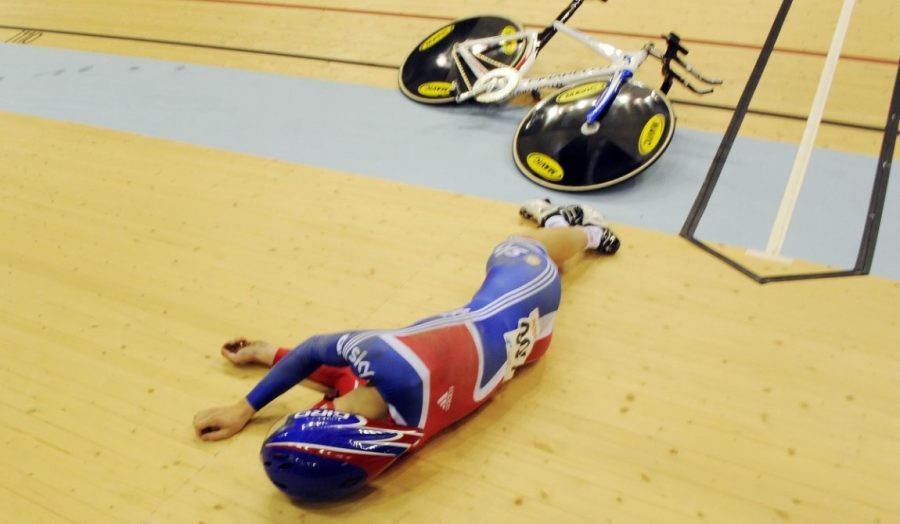
The big shock of the day came in the qualifying when the relatively inexperienced Great Britain team crashed out earlier in the day, with Owain Doull the only rider to stay on his bike as Sam Harrison, Joe Kelly and World Champion Andrew Tennant crashed onto the boards.
World Cup standings after 2 round:
- Belgium (15 points)
- Switzerland (14 points)
- Denmark (12 points)
===
Women’s Team Sprint
GOLD – Great Britain (VARNISH, JAMES) – 33.428
SILVER – Spain (CALVO BARBERO, CASAS ROIGE) – 34.102
BRONZE – France (CLAIR, MONTAUBAN) – 34.197
Jess VARNISH and Becky JAMES won Great Britain’s first gold medal of the competition, riding a great race to take gold against Spain in a time of 33.428. James replaced the retired Victoria PENDLETON and she and Varnish brought the packed Sir Chris Hoy Velodrome crowd to their feet with a fine ride. This was the second World Cup win for the pair who took gold in the first round in Cali last month and are already proving themselves on the road to Rio 2016.
The bronze medal race saw France and Russia go head-to-head. The race was tipped to be close but France edged out Russia for the medal with a fine performance on track.
World Cup standings after 2 round:
- Great Britain (24 points)
- Japan (13 points)
- Spain (10 points)
===
Women’s Team Pursuit
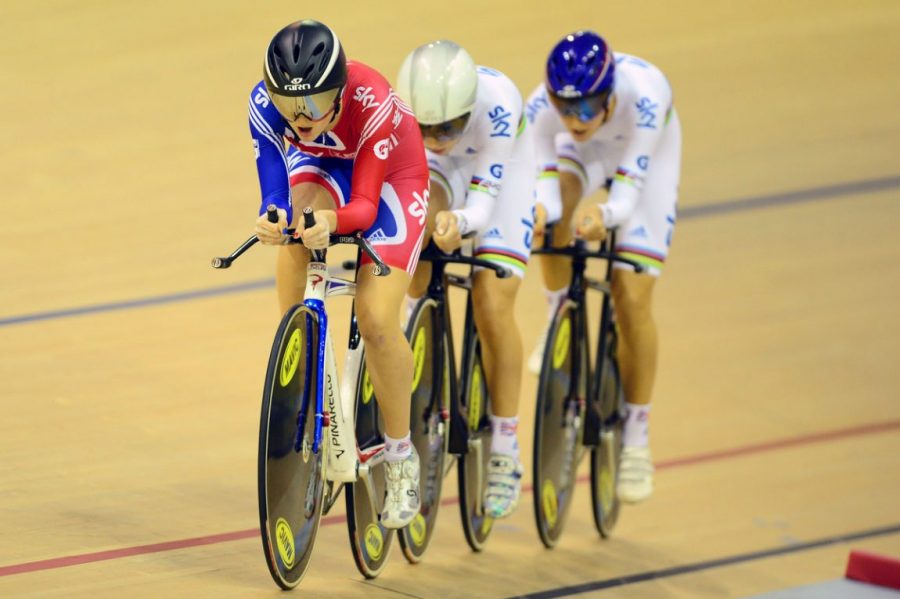
GOLD – Great Britain (TROTT, BARKER, KING) – 3:21.043
SILVER – Australia (ANKUDINOFF, CURE, HOSKINS) – 3:22.026
BRONZE – Belarus (SHARAKOVA, DYLKO, PAPKO) – 3:25.737
The two big rivals went head to head in the Women’s team pursuit. The race was a closely fought in the early stages but Great Britain started to pull away at the later stages, gaining a narrow lead over their rivals. The Great Britain trio featured two of the Olympic gold medal winning squad in Laura Trott and Dani King alongside British Cycling Olympic Academy Programme rider 18 year old Elinor Barker.
In the bronze medal race Lithuania always had a lot of work to do if they hoped to beat Belarus. The pattern was set early with Belarus starting well and leaving too big a gap to the Lithuanians to close. Belarus took the bronze medal and lead the standings after two rounds of the series.
World Cup standings after 2 round:
- Belarus (15 points)
- Great Britain (12 points)
- Italy (12 points)
===
Men’s Team Sprint
GOLD – Germany (ENDERS, FOERSTEMANN, BOETTICHER) – 43.887
SILVER – Great Britain (HINDES, KENNY, CLANCY) – 44.175
BRONZE – France (PALMA, SIREAU, LAFARGUE) – 44.803
Germany won Gold in the Men’s Team Sprint, beating Great Britain in the final. Germany’s performance was just too good for the Olympic Champions who took silver in Ed Clancy’s first race since making the transition from endurance to sprint to fill the place of Sir Chris Hoy’s in the new-look team.
Bronze medal went to France who beat Poland.
World Cup standings after 2 round:
- Germany (24 points)
- Japan (12 points)
- Russia (12 points)
===
Women’s 500m TT
GOLD – Belarus (PANARINA) – 34.121
SILVER – Germany (VOGEL) – 34.318
BRONZE – Spain (CALVO BARBERO) – 34.451
The Women’s 500m Time Trial race saw Olga PANARINA take gold with Germany’s Kristina VOGEL taking silver and Spain’s Tania CALVO BARBERO taking bronze. Fresh from winning gold in the Team Sprint Great Britain’s Jess Varnish took to the track again, this time finishing 6th.
World Cup standings after 2 round:
- Belarus (12 points)
- Germany (10 points)
- Spain (8 points)
===
Men’s Scratch Race
GOLD – Switzerland (MARGUET, Tristan)
SILVER – Ireland (IRVINE, Martyn)
BRONZE – Netherlands (EEFTING, Roy)
The race saw a lot of movement in the initial stages with a number of break-out groups through the race. With 23 laps to go, the group came back together with nobody able to get a decent amount of daylight between themselves and the main pack. No one seemed able to make that move that would separate themselves from the pack. Great Britain’s Simon YATES was involved in a number of attempted break away packs. With 15 laps to go another breakout group tried to break away from the peloton but in the end it came down to a sprint which was won by Tristan MARGUET from Switzerland. Martyn IRVINE from Ireland was hugely committed through the entire race and was rewarded with silver. In the bronze medal place was Roy Eefting of the Netherlands.
===
Men’s Omnium
Omnium I – Flying Lap
Rank 1 Germany (LISS) – 13.252
Rank 2 Switzerland (BEER) – 13.349
Rank 3 Australia (O’SHEA) – 13.354
Omnium II – Points Race 30km
Rank 1 Australia (O’SHEA)
Rank 2 France (BRISSE)
Rank 3 Netherlands (VELDT)
Omnium III – Elimination Race
Rank 1 Spain (ELORRIAGA ZUBIAUR)
Rank 2 Australia (O’SHEA)
Rank 3 Czech Republic (RYBIN)
Overall standings after 3 events
Rank 1 Spain (ELORRIAGA ZUBIAUR)
Rank 2 Germany (LISS)
Rank 3 Switzerland (BEER)
The crowd were treated to some great action during the first three of six Omnium events on Day 1 of the UCI Track Cycling World Cup Glasgow.
Germany’s Lucas Liss drew first blood, posting the fastest time (13.252) in the Flying Lap. Next up was the 30km Points Race which was won by current World Champion Glenn O’Shea of Australia. O’Shea narrowly missed out on a second win as he was outsprinted by Spain’s Unai ELORRIAGA ZUBIAUR on the final lap of the Elimination Race.
ELORRIAGA ZUBIAUR, who now leads the Omnium at the midway stage. The German, LISS, is in second overall with BEER in third. Great Britain’s Jon Dibben lies in 11thoverall.
BBC Broadcast Times
- Saturday 17 November:
- Sunday 18 November